The market barometer has turned negative for the first time since January 2026 as TEU mile growth slipped below supply growth due to the reduction in the number of ships rerouted to the Cape and Golden Week blanked sailings in China that have brought down global vessel demand. The pace of new ship deliveries also picked up slightly with almost 200,000 teu delivered in September with no ships deleted in the same period. Market activity will remain subdued in the next 2 weeks over the extended Chinese National Day holidays, with carriers still aiming for a fresh round of rate hikes from 20 October 2026 especially on the Asia-Europe route where rates have slipped by over 60% since July. The accelerated return to the Suez route remains the biggest hurdle to the carriers rate hike efforts, as ONE will soon join CMA CGM, Maersk, MSC, Hapag-Lloyd and COSCO/OOCL on the shorter route, along with lower cargo demand as the summer peak season comes to an end.
Port congestion remains elevated especially in Asia where the ships returning from Europe via the Suez are bunched up with ships on the Cape route as South Asia, Southeast Asia and East Asia ports account for 64% of global congestion.

 Johnson Leung

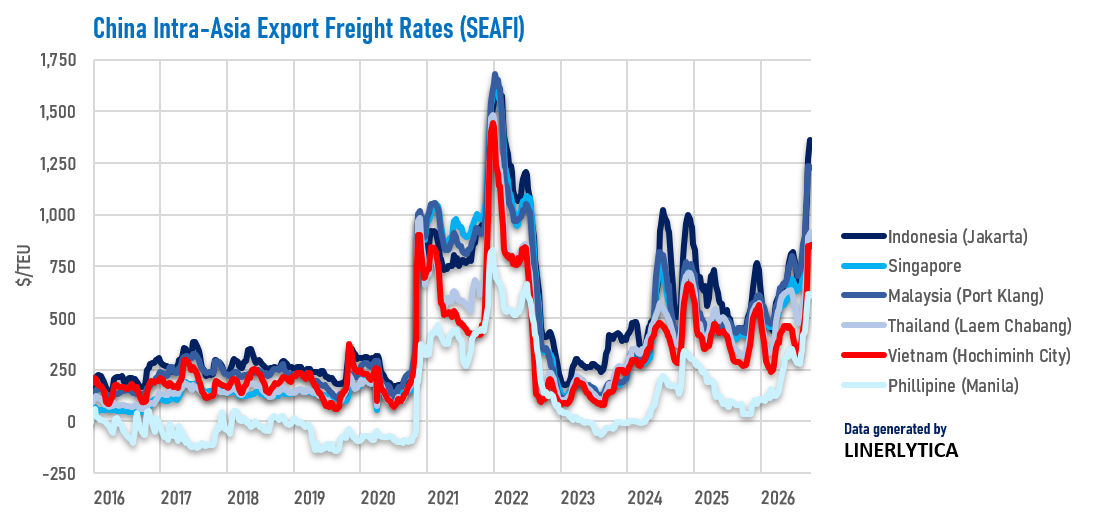
Intra-Asia rates rise to a post-COVID high
Intra-Asia freight rates have surged by 177% since the end of February and have hit their highest levels since the 2021-22 COVID peak. Rising congestion across key Southeast Asian ports including Singapore, Port Klang and Ho Chi Minh City/Cai Mep in the last 3 weeks have added to delays at Chinese ports that have persisted since July, that have provided a new impetus to intra-Asia rates. The lack of new feeder vessel capacity, especially on the Bangkok-max segment where only 5 new ships have been delivered so far this year has further compounded the capacity shortage on the intra-Asia routes.
Register Free Trial
Weekly/Monthly Market Pulse: US$1,500/US$1,800 per year