While traffic on the Strait of Hormuz remains restricted with just 2 containerships making outbound passages last week, traffic on the Bab el Mandeb continues to increase with CMA CGM and Maersk pushing 3 more services back to the Suez route as they continue to defy the threat of Houthi attacks. These moves are aimed at combating the shortage of vessels and container equipment that have been made worse by protracted port congestion across North Asia and Europe. COSCO Shipping who has so far resisted pressure to bring their own ships back to the Suez route could be the next to shift, as it restarts its own China-Red Sea service even as it expands its coverage of the Med and Red Sea ports using space on COSCO Shipping Specialized Carriers’ mpp ships with more than 20 ships of 2,700-3,600 teu that are now deployed on these routes.
Several Northern Sea Route (NSR) services have also been launched in August as the number of containership transits on the Arctic route is set to reach a new record with over 25 sailings planned this year. Spot freight rates rebounded last week on resurgent peak season demand, although the Asia-Europe rates have softened noticeably with further rate drops expected in the next 2 months based on current futures prices.

 Johnson Leung

Over 2.4m TEU stranded in North Asia by Typhoon Dolphin
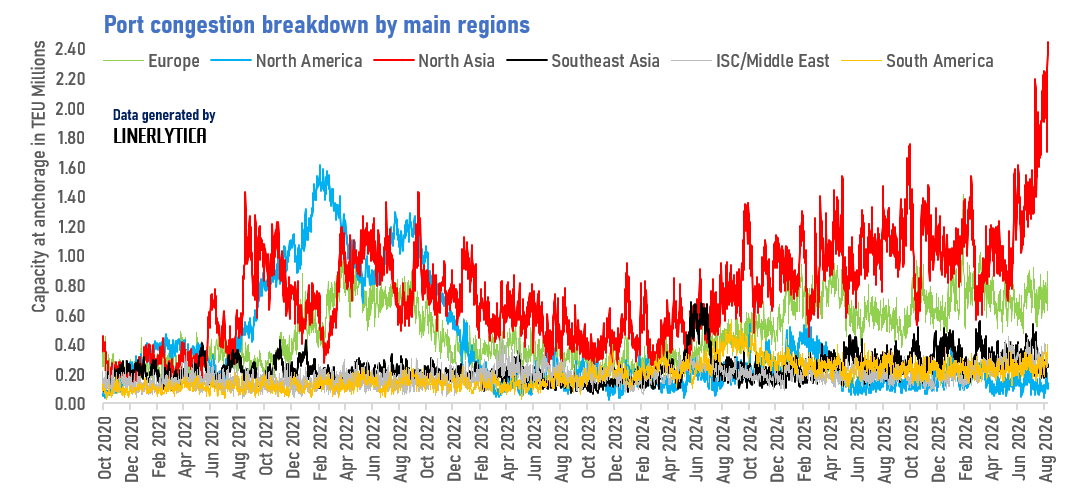
Port congestion across North Asia has surged with more than 2.4m TEU of containership capacity currently stranded as Typhoon Dolphin hit China’s eastern coasts on 9 August 2026. The tropical storm is the third and strongest to hit China in the last 5 weeks alone, forcing ships to take shelter away from the path of the typhoon. Vessel delays are expected to be protracted with Ningbo and Shanghai the worst affected ports with terminal operations halted from 7th and 8th August. The congestion has also spread to ports in Southern China and would take a few weeks to clear the vessel backlog.
Register Free Trial
Weekly/Monthly Market Pulse: US$1,500/US$1,800 per year