The lack of progress in the re-opening of the Straight of Hormuz and persistently high fuel prices have not dampened container cargo demand as volumes globally are rebounding strongly in May, fueling a fresh round of freight rate increases.
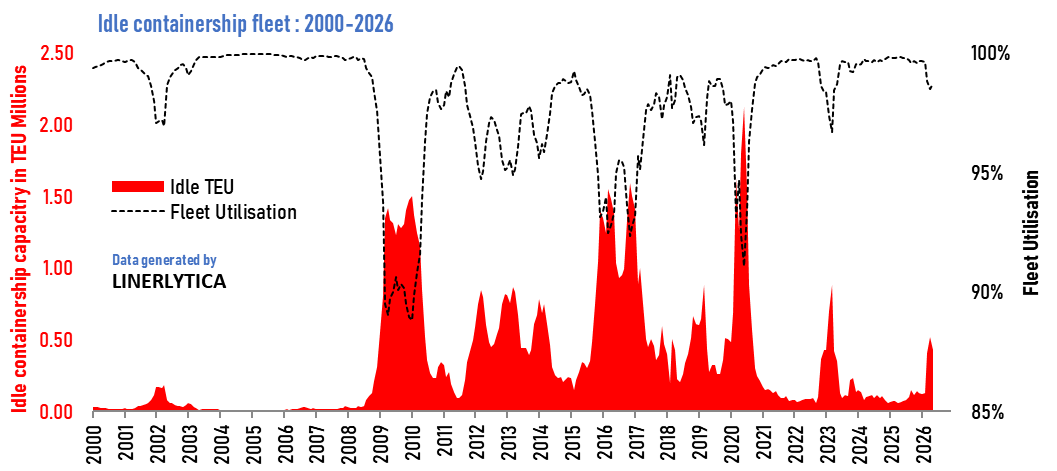
The number of containerships idled in the Persian Gulf remains high due to the continued blockade of the Hormuz and the low number of new ship deliveries in the last 2 months have kept the market severely short of ships as charter rates continue to edge upwards and vessel space remains tight with continued freight rate increases expected through the 2nd half of May.
The improved freight rates have not benefitted all carriers, as Maersk’s operating losses for ocean shipping business widened in the 1st quarter with fellow Gemini partner Hapag-Lloyd also expected to report worsening results later this week. The 2 partners have amended the Gemini Agreement to allow for more blanked sailings as the focus on service reliability have failed to deliver any improvements in earning margins.

 Johnson Leung

Persian Gulf crisis drives rise in idle fleet
Only 17 non-Iranian linked containerships with a total capacity of 127,000 teu have managed to sail out from the Strait of Hormuz since the Iran war started while 79 ships for 312,812 teu remain idle in the Persian Gulf with a further 28 containerships currently deployed as intra-Gulf feeders. The idle ships include 3 units that were attacked by Iran when they tried to breach the Iranian blockade, with the 2,824 teu CMA CGM SAN ANTONIO the latest ship to be hit by a missile attack on 5 May. The US’ counter-blockade of Iranian ships have also kept 10 IRISL containerships idle within the Gulf, along with 3 more ships outside the Gulf including the 5,125 teu TOUSKA that is currently anchored in Karachi after its seizure by the US on 19 April.
Register Free Trial
Weekly/Monthly Market Pulse: US$1,500/US$1,800 per year