MSC has become the first container carrier to operate 1,000 ships as it extended its lead at the top of the carrier rankings amidst continued market uncertainty driven by the Middle East crisis. The US naval blockade of the Strait of Hormuz starting from 13 April will further escalate the current tensions but the impact on the container shipping market is negligible as vessel traffic has been largely limited to Iranian linked ships over the past 6 weeks with just 4 outbound passages made by neutral operators since the war started on 28 February.
Charter rates have continued to strengthen since the start of the war with carriers pouncing on any open tonnage especially with demand remaining very strong to the Red Sea and outer Arabian Sea ports where freight rates are very lucrative as shown by CU Lines’ recent moves to snatch ex-SeaLead tonnage. Outside of the Middle East, freight rates have corrected from their initial post-war peaks due to the lack of any space or equipment shortages and cargo demand is starting to weaken given the macro-economic uncertainties that the war has brought.

 Johnson Leung

US blockade of Strait of Hormuz will have immaterial impact on container markets
The US Central Command’s announcement of a naval blockade of all Iranian ports effective from 1400 UTC on 13 April will not have a material impact on container traffic through the Strait of Hormuz, with Iranian-linked ships expected to continue to test the limits of the US blockade. Out of the 38 containership transits through the Hormuz recorded since the start of the Iran war, only 4 were made by ships operated by neutral parties including 2 from COSCO, 1 from CMA CGM and 1 from GFS. The remaining transits are linked to Iranian interests, with 1 ship making an inbound transit into the Gulf within the last hours before the blockade takes effect.
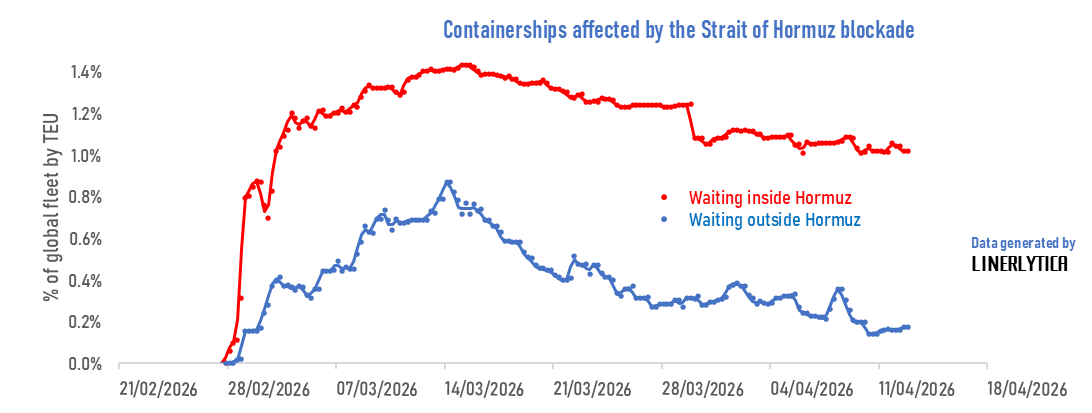
The departure of some of the stranded ships, as well as the partial resumption of intra-Gulf feeder services have reduced the total capacity of containerships waiting inside the Persian Gulf from a peak of 1.4% of the global fleet to 1.0% currently, while ships waiting outside of Hormuz have also declined to only 0.2% as carriers have cleared most of the vessel backlog and redeployed ships away from the Middle East.
Register Free Trial
Weekly/Monthly Market Pulse: US$1,500/US$1,800 per year