ZIM’s future as an independent carrier will be tested in the next 6 months, with the potential sale of the company facing significant challenges. Apart from geo-political hurdles related to its Israeli ownership, the company’s valuation remains a key point of contention as its current market capitalization of $2.4Bn is lower than its cash value of $2.9Bn.
Market headwinds persist with freight rates still slipping in early December after carriers failed to push through their planned GRIs ahead of the crucial decision whether to make an early return to the Suez route. Regardless of the carriers’ near-term moves, TEU-mile demand continues to trend below supply growth and a looming multi-year over-supply problem is developing. Carriers continue to push ahead with their fleet expansion goals, raising the total orderbook to a new record high of 11.5m TEU with 4.5m TEU scheduled for delivery in 2028 alone.

 Johnson Leung

Hapag-Lloyd bid for ZIM faces major hurdles
ZIM’s shareholders will decide at the annual general meeting on 19 December 2025 to confirm the election of board members that will steer ZIM’s strategic review as it seeks potential buyers for the company. Apart from a buyout proposal from ZIM’s CEO Eli Glickman in partnership with roro shipowner Rami Ungar, Hapag-Lloyd have made a bid to acquire ZIM while MSC and Maersk have expressed interest to participate in the proposed sale.
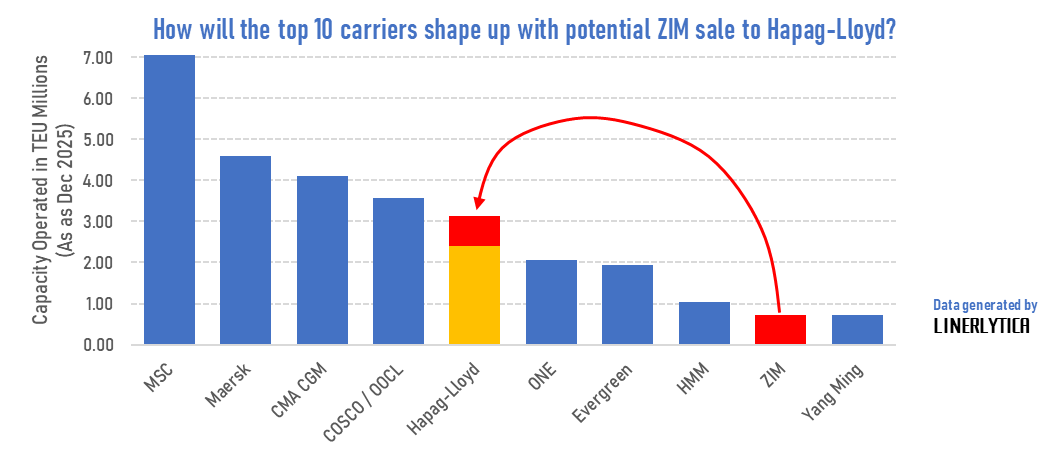
ZIM’s workers’ union has opposed Hapag-Lloyd’s bid due to Qatar (12.3%) and Saudi Arabia (10.2%) stake in the company, citing national security risks. The Israeli government holds a golden share in ZIM and the company is required to provide part of its fleet for the government’s use when required. The combination of Hapag-Lloyd and ZIM will not alter the Top 10 carrier rankings, with Hapag-Lloyd retaining its 5th spot but will allow it to narrow the gap with the Top 4.
Register Free Trial
Weekly/Monthly Market Pulse: US$1,500/US$1,800 per year